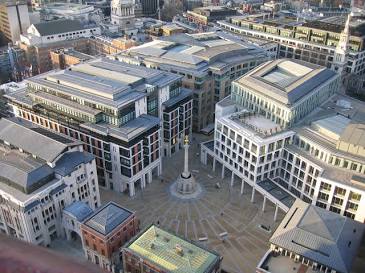
What’s happening to the London Stock Exchange?
The London Stock Exchange (LSE) was formally founded in 1801 although its roots can be traced back to 1698 amongst the coffee shops of the time. The LSE was the centre of London’s financial district as it came to lead the world in commerce.
But what’s happening? The number of London quoted businesses has fallen from 2,500 in 1990 to 1,900 today, a reduction of 24%. By comparison, on the New York Stock Exchange quoted companies have risen by around 35% in a similar period albeit in recent years this too has been falling quite rapidly. Much funding is now provided in various forms of Private Equity, Venture Capital and Private Credit instead of via Public Markets.
London quoted businesses are in play
Commonly quoted metrics indicate that London Market valuations are 30% to 40% below its US comparator as business growth rates are lower in the overall London co-hort. Consequently, we are seeing renewed interest in bidding for UK quoted businesses.
In 2025 for the main London Market, 50 businesses were de-listed, mainly by take-over or by going private. These include names such as Deliveroo, Spectris and Assura alone with a combined value of £13bn.
The share price of Tate & Lyle, a founder of FTSE30, has popped by 36% in the last month as it’s subject to a bid by Ingredion from the USA. Intertek is under bid by EQT (Private Equity) valuing the business at around £11bn. Familiar names such as Legal & General and easyJet, with aggregate market capitalisation of £18bn, are the subject of live market speculation. Bidders are seeing value that is not recognised by the quoted market.
Of course, it’s not a one-way street as companies joining the market in the last year include the London based insurgent bank Shawbrook at £2bn on floatation. But, Revolut, another London founded fintech bank, could be valued at $200bn when it floats in 2028; in all probability in New York not London. The excitement stateside around the current IPOs of SpaceX, Anthropic and potentially Open Ai is amazing to watch as we are talking $3tn plus.
Sometimes these trends can be seen as cyclical. There are still IPOs coming to market in the UK, but the long-term shift is firmly transatlantic as markets in the US are seen as more dynamic, have greater liquidity and lower taxes. Time will tell if this momentum shifts back.